Ceiling Cracks in Vermont Homes: What They Actually Mean
Vermont homeowners notice ceiling cracks every fall when the heating comes on and the house settles. Most are cosmetic. Some are not. Tim Chila explains how to tell the difference.
Quick Answer
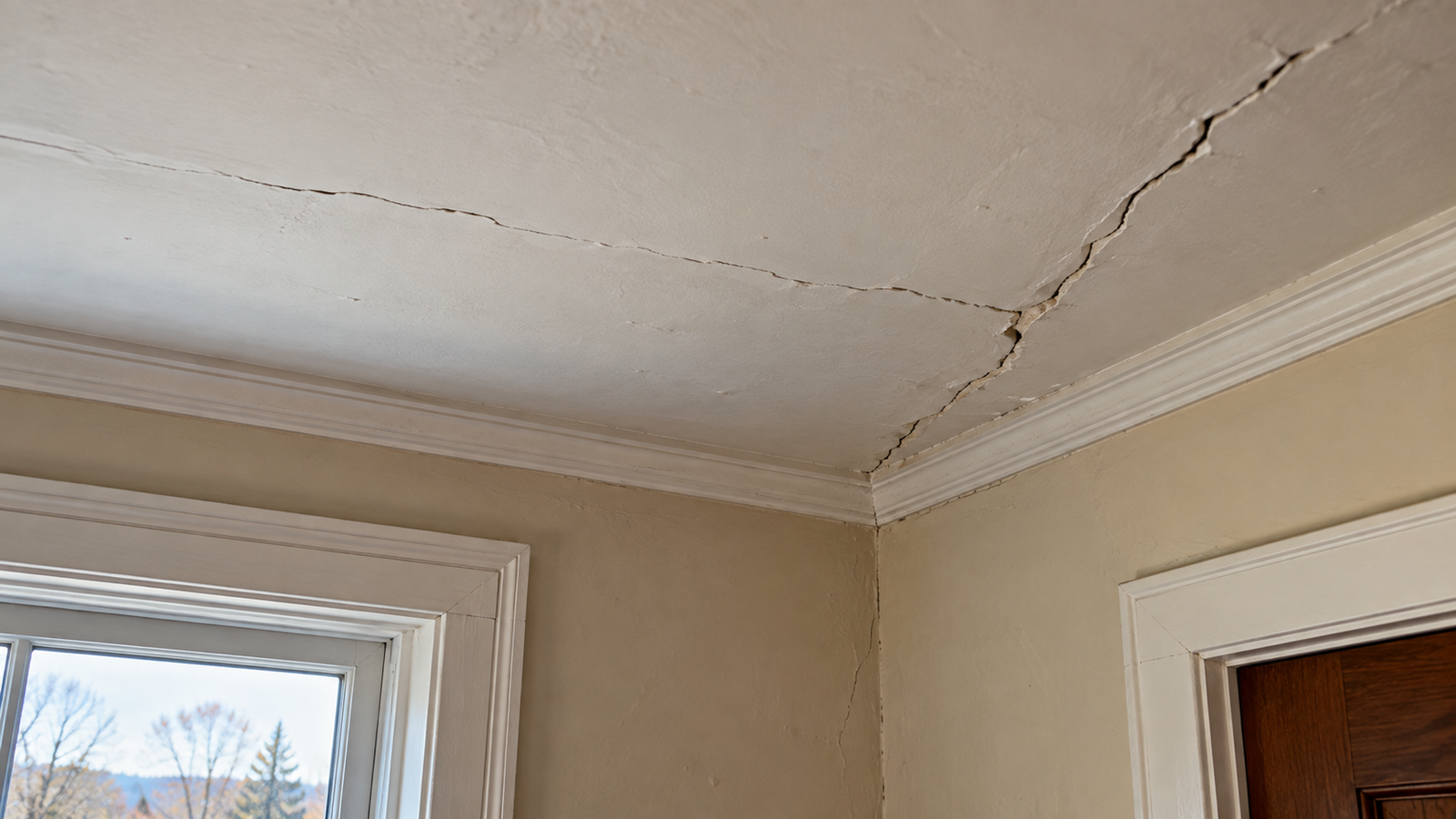
Most ceiling cracks in Vermont homes are cosmetic and caused by the seasonal wood movement and humidity swings that come with our climate. The cracks that need immediate professional attention are wide cracks (wider than a quarter inch), diagonal cracks radiating from corners, cracks accompanied by sagging or bowing, and cracks that have grown since you last noticed them. A hairline crack along a seam or joint is almost always cosmetic.
Why Vermont Homes Crack More Than Homes in Other Climates
Every fall I get calls from homeowners who noticed a crack in their ceiling and are not sure whether to worry about it. September is the month this happens most, and the reason is straightforward: the heating has just come back on after a summer of high humidity, and the house is starting to dry out and contract. Wood that expanded through July and August is now pulling back, and the places where two materials meet are where that movement shows up first.
Vermont's seasonal swing is larger than most of the country. We go from 70 to 80 percent relative humidity in summer to 20 to 30 percent in a heated house in January. That is a significant range, and every house moves through it twice a year.
Cosmetic Cracks: What the House Is Telling You Is Normal
Hairline cracks along drywall seams, cracks that follow the tape line between sheets, and fine spider-web cracks in old plaster are almost always cosmetic and caused by the normal wood movement and seasonal humidity changes that every Vermont home goes through.
In drywall, the most common cosmetic crack follows the seam between two sheets, where the tape and compound are slightly more rigid than the surrounding material. In older plaster ceilings, fine hairline cracks in a web pattern are the plaster responding to the same seasonal movement in the wood lath behind it.
These cracks are easy to fill with a flexible joint compound and repaint. They may come back the following season. That is not a repair failure. It is the house doing what it does in Vermont.
The Cracks That Need a Structural Look
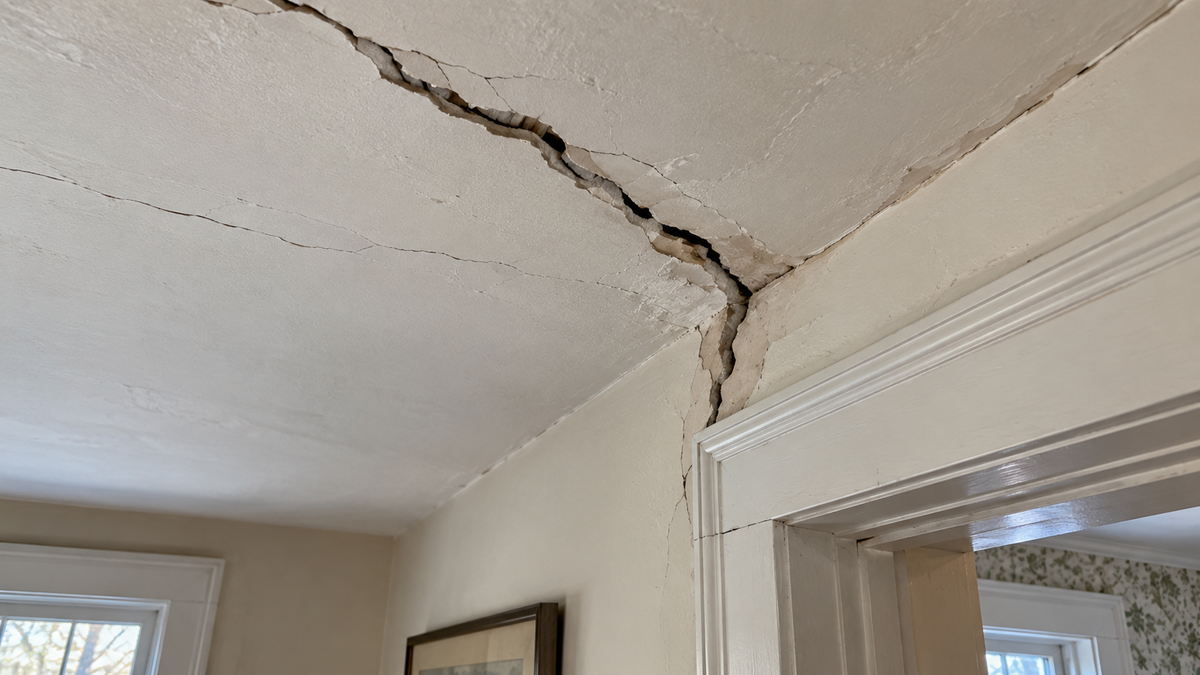
A crack wider than a quarter inch, a diagonal crack radiating from a window or door corner, any crack accompanied by sagging or a change in ceiling plane, or a crack that has visibly grown since you last noticed it should be assessed by a contractor before winter closes off the access points.
Diagonal cracks at door and window corners are the most important to watch. These corners are where structural loads concentrate, and a diagonal crack there can indicate an inadequate header, foundation movement, or a compromised load-bearing wall. It is the pattern I look for first.
A ceiling with a visible sag or bow is a different category from a surface crack. In Vermont homes, ceiling sag usually traces back to a roof leak that has saturated the ceiling material, or a joist weakened by rot from a plumbing or roof leak above. This needs to be investigated promptly.
If you are not sure what you are looking at, the right move is to have someone take a look before winter. Access to attic spaces and roof areas becomes significantly harder once snow arrives, and a problem that is easy to diagnose in October can be invisible by December.
Let's Have a Look
If you have a crack you are not sure about, give me a call. I will come out, look at the crack and the structure around it, and give you an honest read on what it means and whether anything needs to be done.
Call me at (802) 585-9112 or send a message.
Common Questions (FAQs)
Should I fill ceiling cracks before winter?
For cosmetic cracks, yes, filling them before heating season is a good time because the house is in its most contracted state and the crack is at its widest, which means the filler bonds to both sides fully. Use a flexible joint compound rather than a rigid spackling paste, which will crack again with the next seasonal movement.
Do ceiling cracks mean foundation problems?
Not typically. Most ceiling cracks in Vermont homes are caused by wood movement and humidity changes, not foundation movement. Foundation problems tend to show up as diagonal cracks that run from corners of openings toward the ceiling, cracks that are wider at one end than the other, or cracks accompanied by doors and windows that stick or no longer close properly. If you have those patterns together, that warrants a structural look.
Why do cracks appear every year in the same spot?
Because the house moves through the same seasonal cycle every year, and the weakest point in the ceiling surface moves with it. A seam or a joint that cracked once will crack again unless the underlying movement is eliminated, which in most cases it cannot be. The practical approach is to use a flexible repair compound and understand that annual touch-up in some spots is a normal part of maintaining an older Vermont home.
At what point is a ceiling crack an emergency?
A ceiling crack becomes urgent when it is accompanied by visible sagging or deflection, when material is actively falling, or when it appeared suddenly after a heavy snow load or rain event. Those situations warrant immediate attention. A crack that has been there for years and has not changed is very unlikely to be urgent, though it is still worth having assessed.