Composite Vs Pressure-Treated Vs Cedar Decking In Vermont
Vermont's freeze-thaw cycles, heavy snow loads, and road salt tracked across outdoor surfaces make decking material choice more consequential here than almost anywhere. Tim Chila compares the three main options honestly.
Quick Answer
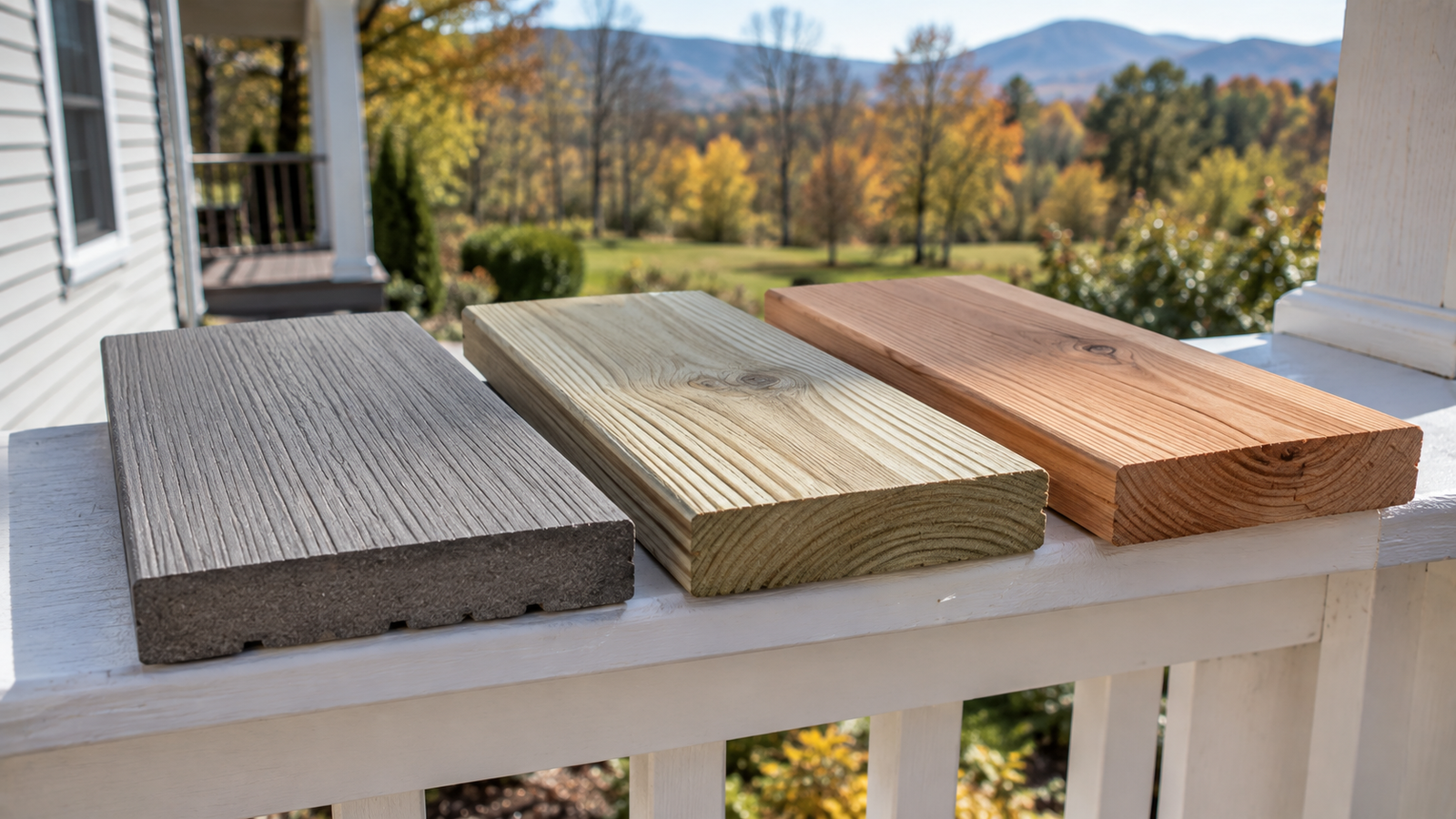
For Vermont specifically, composite decking holds up best over time because it does not absorb water, does not rot at the fastener holes, and does not expand and contract as dramatically through freeze-thaw cycles. Pressure-treated pine is the most affordable upfront but requires the most maintenance in our climate. Cedar is the best-looking natural wood option but needs regular sealing to survive Vermont winters. The right choice depends on your budget, your maintenance tolerance, and how long you plan to own the house.
Why Vermont Is a Harder Test for Decking Than Most Places
Vermont is harder on decking than almost anywhere else. Heavy snow loads, road salt and ice melt tracked across the surface, and freeze-thaw cycles that repeat dozens of times in a single February and March mean a material that holds up fine in Virginia will fail prematurely here.
This is the context for every material recommendation I make. It is not that one material is universally better. It is that Vermont's specific conditions weight the comparison differently than you would see in a warmer or more stable climate.
Pressure-Treated Pine: The Cost Leader With the Highest Maintenance Demand
Pressure-treated pine is the most affordable decking material upfront but requires annual or biannual sealing in Vermont to prevent the water absorption and fastener-hole rot that our climate accelerates, and a deck that is not maintained will need replacing significantly earlier than one built with composite or cedar.
Pressure-treated wood works by injecting preservative chemicals into the wood fiber, which protects against rot and insects. But it does not stop the wood from absorbing water, and it does not prevent the expansion and contraction that comes with Vermont's humidity swings. A pressure-treated board that is not sealed will cup, check, and eventually split at the fastener holes as water repeatedly enters and freezes.
Annual cleaning and sealing is the recommendation for pressure-treated in Vermont. Most homeowners do it every two to three years. The deck shows it.
Cedar: The Natural Wood Choice With Vermont Conditions
Cedar is naturally rot-resistant and handles moisture better than pressure-treated pine, which makes it a better natural wood choice for Vermont, but it still needs regular sealing to maintain its appearance and longevity in a climate with our level of moisture exposure.
Cedar's natural oils give it some resistance to moisture absorption, and it does not have the checking and cupping problems of pressure-treated pine at the same rate. It is also significantly better-looking, with a warm, natural grain that pressure-treated wood does not have when new and loses quickly as it weathers.
Cedar costs more than pressure-treated and still needs sealing in Vermont to maintain its appearance. Unsealed cedar will gray and weather, and will eventually check and splinter, though more slowly than pressure-treated pine.
Composite: The Higher Upfront Cost That Pays Over Time in Vermont
Composite decking costs more upfront than either wood option but requires almost no maintenance, does not rot at fastener holes, and handles Vermont's freeze-thaw cycles significantly better than natural wood because it does not absorb water in the way wood does.
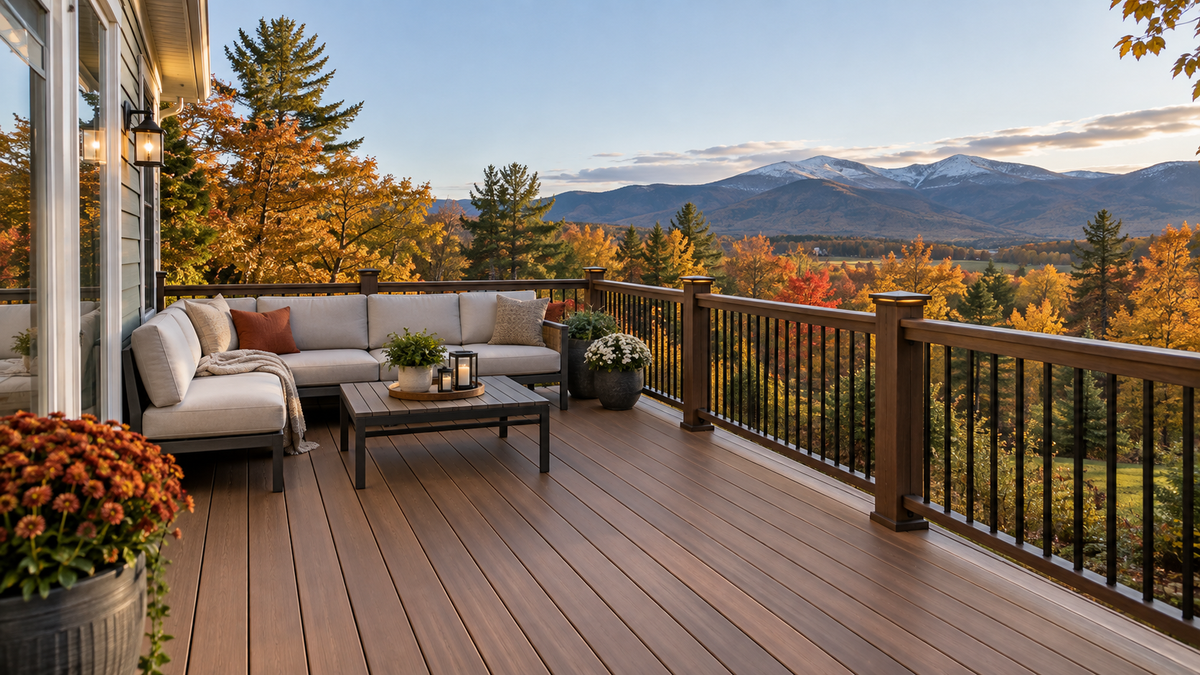
In Vermont specifically, composite's advantage over wood grows over time rather than staying constant. A pressure-treated deck that is not perfectly maintained will need significant repairs or replacement within fifteen years in our climate. A quality composite deck, properly installed with the right hidden fastener system, will look nearly the same in year fifteen as it did in year one. For a homeowner who plans to stay in the house for twenty or more years, composite typically costs less over the life of the deck even though it costs more to build. You can see this material thinking applied in our deck building and repair work across Chittenden County.
Let's Build Your Deck
If you are planning a new deck and want an honest recommendation for your specific situation, budget, and how long you plan to stay in the house, give me a call. I will tell you which material makes the most sense and give you a transparent, itemized estimate for each option so you can compare directly.
Call me at (802) 585-9112 or send a message.
Common Questions (FAQs)
Does composite decking hold up under Vermont snow loads?
Yes. Quality composite decking is engineered to handle the span and load requirements of residential decks including the snow loads typical of Vermont. The structural frame under the decking, meaning the joists and beams, carries the snow load regardless of the decking material on top. What matters for the decking boards themselves is that they do not absorb the moisture from snowmelt the way wood does, which is where composite has a clear advantage.
Can I use ice melt on a composite deck?
Most composite decking manufacturers recommend avoiding rock salt, which can damage the surface over time. Calcium chloride ice melt is generally safer for composite and is what we recommend for Vermont homeowners who need to de-ice their deck. Shoveling and a plastic shovel rather than a metal blade is the best approach for snow removal.
How much more does composite cost than pressure-treated in Vermont?
Composite decking typically costs fifty to seventy percent more than pressure-treated pine for the boards. The framing cost is the same regardless. Over twenty years, when you factor in maintenance on pressure-treated (sealing, board replacement, fastener re-driving), the total cost difference narrows considerably.
Is cedar worth the extra cost over pressure-treated in Vermont?
For homeowners who want a natural wood look and are committed to maintaining it, yes. Cedar handles Vermont's moisture better than pressure-treated and looks significantly better when new and when maintained. For homeowners who are honest with themselves that maintenance will not happen consistently, composite is a more forgiving choice in our climate.