Hardwood & Custom Flooring in Vermont: Options, Cost & What Lasts
Your floor takes more abuse than any other surface in the house. Master craftsman Tim Chila breaks down hardwood, engineered, and wide plank flooring for Vermont homes: what each costs, and what actually lasts through our seasons
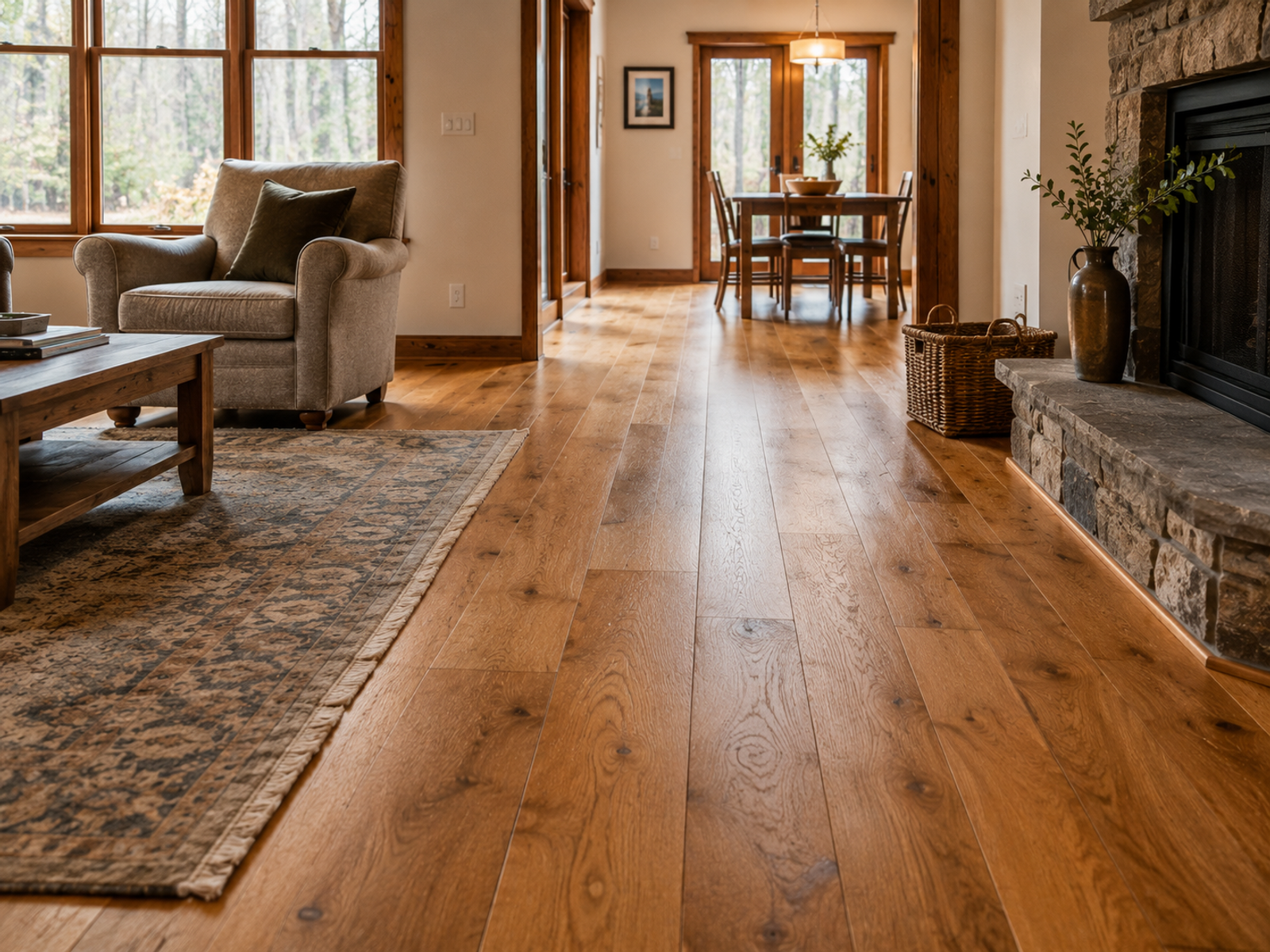
Quick Answer
For Vermont homes, solid hardwood suits dry above-grade living areas because it can be refinished many times. Engineered wood handles basements and spaces with humidity swings better because its stable core resists the seasonal moisture our climate brings. Cost is driven by species, plank width, and whether the floor is site-finished or prefinished.
Why Choosing the Wrong Floor Is a Costly Mistake in Vermont
Your floor takes more abuse than any other surface in your home. Foot traffic, furniture, pets, dropped pans, and here in Vermont, a steady march of snow, salt, and grit tracked in for half the year. Choosing the wrong flooring is one of the most common and most expensive mistakes I see homeowners make.
The issue is usually not the product itself. It is installing the wrong product in the wrong room. Solid hardwood in a damp Vermont basement will gap and cup within a season. After 50 years of installing floors in homes across Chittenden County, let me walk you through what each option actually does and where it belongs.
The Main Flooring Options for a Vermont Home
For Vermont homes the main choices are solid hardwood for above-grade living areas, engineered wood for basements and slabs, and tile for entries and mudrooms, with each option handling our seasonal moisture and traffic differently.
There is no single best floor, only the right floor for a given room and how you live:
- Solid hardwood: the classic choice for living rooms, bedrooms, and hallways. Lasts generations and can be sanded and refinished many times, but it moves with humidity so it is not ideal below grade.
- Engineered wood: real wood over a stable plywood core. Handles humidity and temperature swings far better than solid wood, making it the right choice for basements and over concrete slabs.
- Wide plank: wider boards that suit the Vermont farmhouse look. Available in both solid and engineered, they show off the grain and character of the wood.
- Tile: the right answer for entries, mudrooms, and bathrooms where snow, salt, and water would damage wood over time.
Solid vs. Engineered: The Vermont Difference
Vermont's swing from humid summers to bone-dry heated winters is the deciding factor: solid hardwood handles that swing fine on a stable main floor but is risky in a damp basement, while engineered flooring's cross-layered core stays put through those swings and belongs below grade or over concrete.
This is the question I get most often. The National Wood Flooring Association recommends engineered wood for below-grade and over-concrete installations for exactly this reason. Above grade, in your main living areas, solid hardwood is hard to beat because you can refinish it decades from now and make it look new again. Engineered flooring gives you the look of wood on a properly prepared slab without the swelling and gapping solid wood would suffer below grade.
What Drives Flooring Cost in Vermont
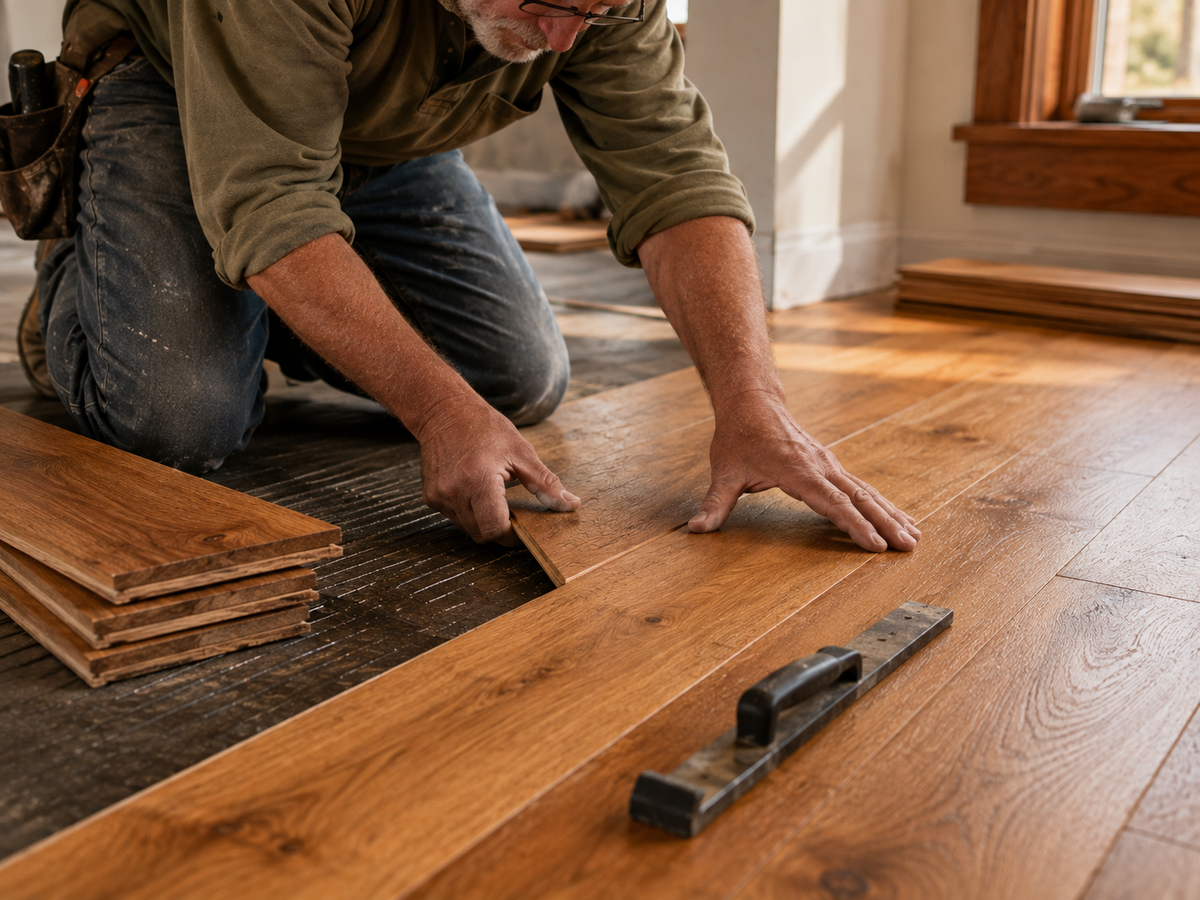
Standard-width oak or maple sits at the more affordable end. Wide plank, specialty species, and reclaimed wood cost more. Site-finished floors, sanded and coated in your home, cost more than prefinished but give a seamless, custom result.
Subfloor condition matters too, since an old or uneven subfloor may need work before new flooring goes down. Flooring is also one of the decisions that comes up during a whole-house renovation, and it is worth planning early so it fits the rest of the project budget. I give you a transparent, itemized estimate that breaks down the material, the preparation, and the labour so there are no surprises.
Let's Find the Right Floor
If you are planning new floors as part of a remodel or on their own, give me a call at (802) 585-9112 or send me a message through the website.
Common Questions (FAQs)
Is engineered wood as good as solid hardwood?
For many Vermont rooms, yes, and in some it is better. Engineered wood is real wood on top, and its stable core resists the humidity swings that can gap or cup solid hardwood. It is the smarter choice for basements and over concrete. Solid hardwood wins where you want to refinish repeatedly over decades.
Can you put hardwood in a Vermont basement?
Solid hardwood is risky below grade because of moisture, but engineered wood is designed for exactly that setting. Over a properly prepared slab with the right underlayment, engineered flooring gives you the look of wood without the swelling and gapping solid wood would suffer.
How long does floor installation take?
Prefinished flooring can often be installed in a few days per area. Site-finished floors take longer because of the sanding, coating, and drying time between coats. Subfloor repairs add time. You get a realistic timeline with your estimate.
What flooring holds up best with pets and children?
A durable hardwood with a tough finish, or a quality engineered floor, holds up well. Harder species like oak and maple resist dents better than softer woods. Pairing wood living areas with tile at the doors is a practical combination for busy Vermont homes.