Porch Repair & Rebuilding in Vermont: What Freeze-Thaw Winters Do to Wood
Most Vermont homeowners notice the porch is worse than they thought right around September. Tim Chila explains what freeze-thaw winters actually do to a wood porch, what fails first, and how to tell whether repair or rebuild is the right call.
Quick Answer
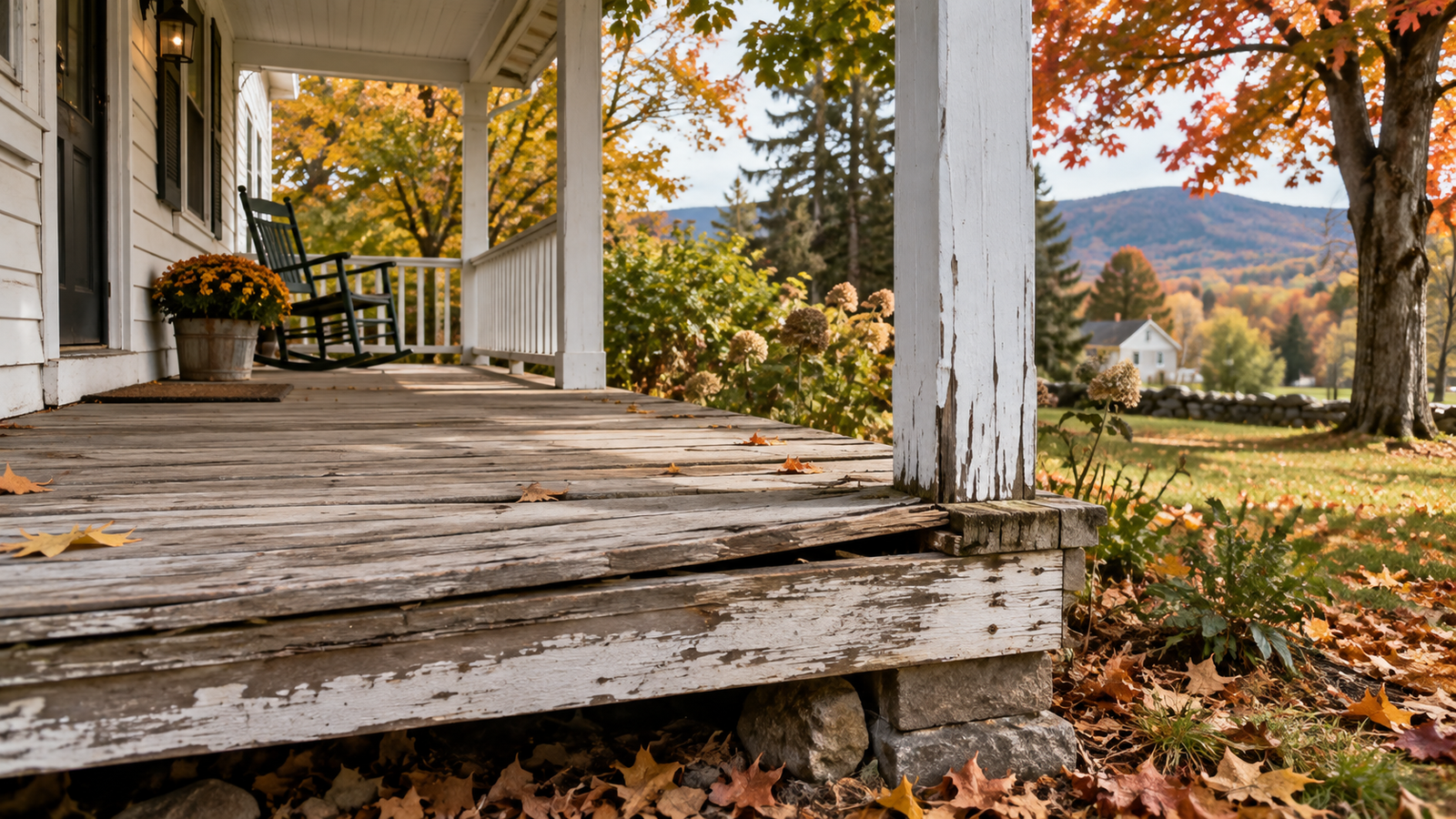
Vermont's freeze-thaw cycles attack a wood porch at the same points every time: the ledger board where the porch attaches to the house, the post bases where wood meets concrete, and the decking boards where standing water sits. These are the three places to inspect first. Whether you repair or rebuild depends on how far the damage has spread from those points.
Why Vermont Porches Fail Faster Than Homeowners Expect
Vermont is one of the hardest climates on wood construction that exists. The combination of heavy snow loads in winter, ice damming at the roof-porch junction, and the repeated freeze-thaw cycles through late winter and early spring is relentless. Water gets into a small gap, freezes, expands, opens the gap wider, and the cycle repeats until what was a hairline crack becomes a structural failure.
A porch can look fine from the surface for years while damage works from the inside out.
The Three Places That Fail First
In Vermont porches, the ledger board, the post bases, and the decking boards are the first points of failure because each one traps water in a way that accelerates freeze-thaw damage far faster than exposed surfaces that can dry out.
The ledger board is the most serious failure point. Water that gets behind it cannot escape, sits between the ledger and the house sheathing, and rots both. A ledger without proper metal flashing will fail in Vermont within ten to fifteen years regardless of the wood species used. When I see an unflashed ledger, the damage behind it is already there.
Post bases are the second failure point. A wood post sitting directly on a concrete pier with no metal standoff base will wick moisture from the concrete and rot from the bottom up. The post can look sound at eye level while the bottom two inches are completely gone. A metal post base that holds the wood an inch above the concrete is a fifteen-dollar part that extends the life of a post by decades.
Decking boards fail at the fasteners. Every screw or nail hole is an entry point for water. Boards that are not gapped properly trap debris and standing water. In Vermont, composite decking handles this better than pressure-treated wood because it does not absorb water the way wood does.
Repair or Rebuild: How to Make the Right Call
The decision between repair and rebuild comes down to whether the structural members, specifically the ledger, the beams, and the posts, are sound. If the decking and railings have failed but the frame is solid, repair is the right call. If the frame has been compromised by rot, rebuilding is safer and less expensive long-term than patching a structure that will fail again.
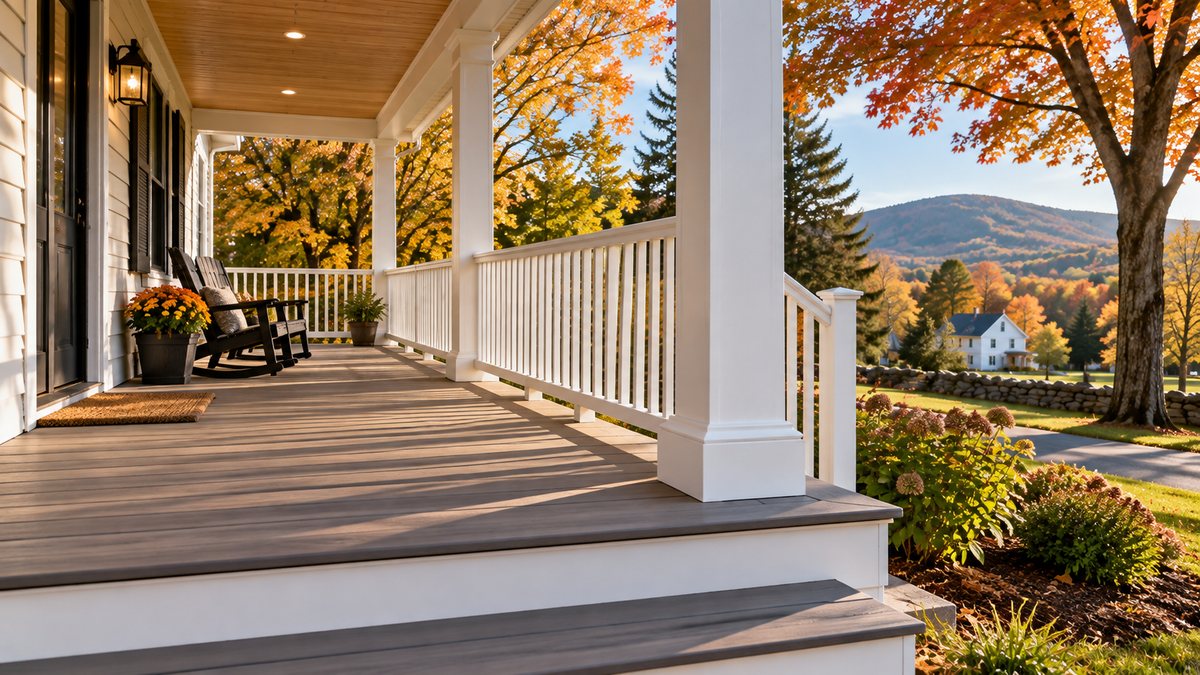
A porch that has been repaired twice is usually a porch that needs to be rebuilt. Each repair addresses the visible damage but not the moisture pathway behind it. If I find the ledger is compromised, I will say so. Rebuilt with proper flashing and post bases, it is more money upfront and significantly less over the next twenty years. You can read more about how we approach repair versus rebuild decisions on outdoor structures generally.
Let's Look at Your Porch
If your porch has a soft spot, a bounce, or a visible sag, the right time to look at it is before it spends another winter getting worse. I will come out, go under it if there is access, check the ledger and the posts, and give you an honest read on what you are dealing with.
Call me at (802) 585-9112 or send a message.
Common Questions (FAQs)
What is ledger flashing and why does it matter so much in Vermont?
Ledger flashing is a metal barrier installed between the ledger board and the house sheathing that directs water away from the connection rather than letting it pool there. In Vermont, where ice and snowmelt create sustained water pressure at this joint through the winter and spring, proper flashing is not optional. A ledger installed without it will fail. Most porch failures I see trace back to this single missing detail.
How long should a properly built Vermont porch last?
A porch built with proper ledger flashing, metal post bases, ground-contact rated lumber, and composite or sealed wood decking should last thirty to forty years with normal maintenance.
Does a porch rebuild require a building permit in Vermont?
In most Chittenden County towns, a full porch rebuild requires a building permit because it involves structural work attached to the house. A like-for-like decking replacement typically does not. The permit requirement is worth confirming with your town before starting because the rules vary, and we handle this as part of the project.
Is composite decking worth the extra cost on a Vermont porch?
In Vermont specifically, yes. Composite decking does not absorb water the way pressure-treated wood does, which means it does not expand and contract as dramatically through freeze-thaw cycles, and it does not rot at the fastener holes. The upfront cost is higher but the maintenance cost over twenty years is significantly lower. For a porch that gets heavy snow load and prolonged moisture exposure, composite is the more practical choice.