Wood Rot In Vermont: How To Find It Before Winter
Wood rot in Vermont homes works from the inside out and spends winters getting worse. Tim Chila explains where it hides, how to find it before the ground freezes, and what the repair actually involves.
Quick Answer
Wood rot in Vermont homes is most commonly found at ledger boards where structures attach to the house, post bases where wood meets concrete, window sills and door thresholds where water pools, and any wood in contact with the ground. Fall is the right time to look because the rot is visible, the ground is still workable for repairs, and finding it now prevents another winter of expansion that will make the repair significantly more expensive.
Why Vermont Accelerates Rot Faster Than Most Places
Wood rot does not happen because wood is weak. It happens because fungus grows in wood that stays damp long enough. In most climates that means a chronic leak or a persistently wet area. In Vermont we have that, but we also have something that makes it worse: the freeze-thaw cycle.
The water in damp wood freezes and expands, opening the fiber slightly. When it thaws, the opening is a little larger. Water gets a little deeper. The fungus has more surface area to work with. This repeats dozens of times between November and April. By May, a piece of wood can be significantly further gone than it was in October even if no new water got in.
Fall is the window to catch this. The damage from last winter is visible, the damage from the coming winter has not happened yet, and the ground is still workable if repairs require digging.
Where Rot Hides in a Vermont Home
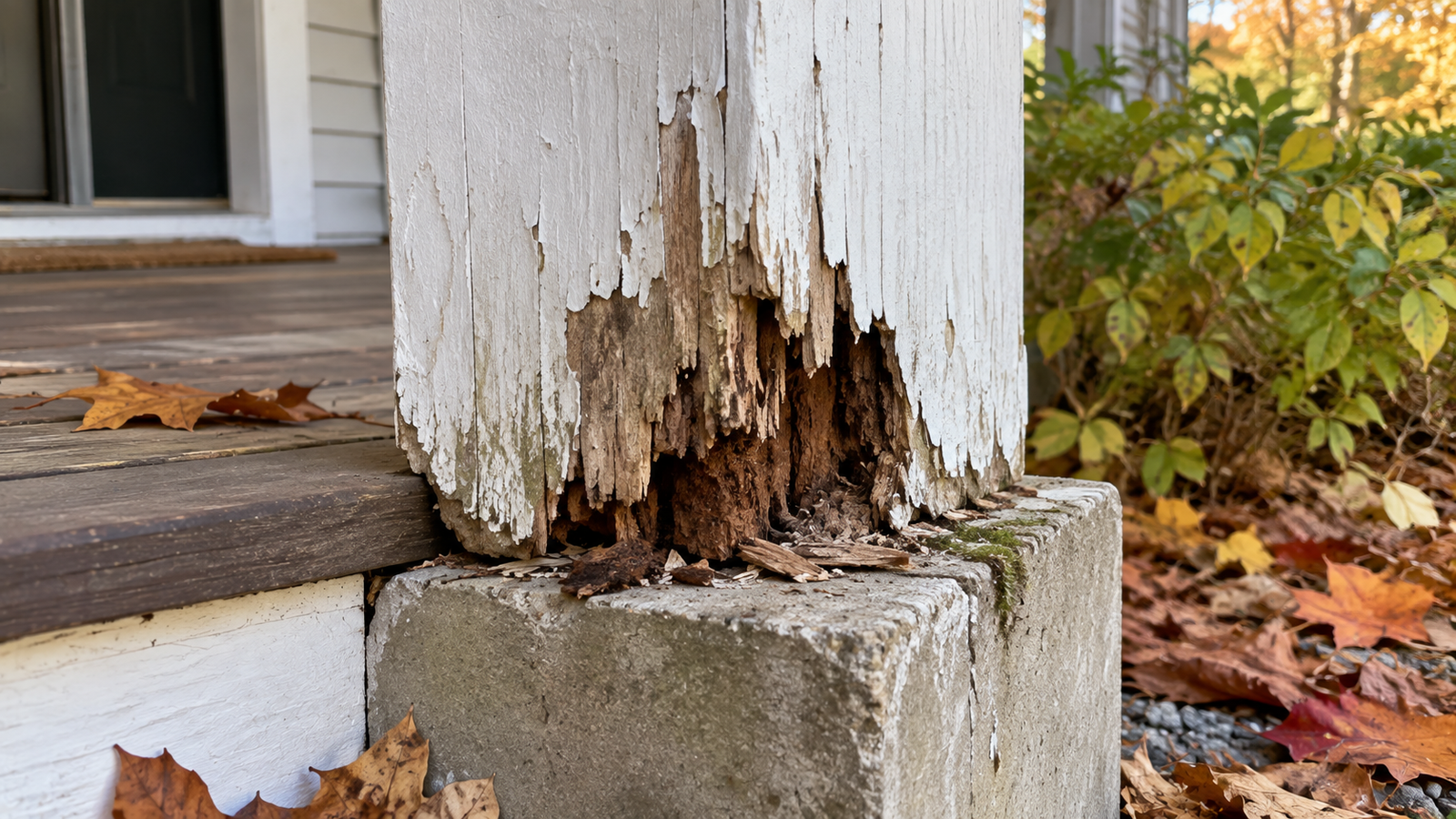
The five places I check first on any Vermont property are the ledger board where a deck or porch attaches to the house, post bases where wood meets concrete footings, window sills where paint has failed and water pools, door thresholds on the weather side of the house, and any wood trim within six inches of grade.
The ledger board holds a deck or porch to the structure of the house. Water behind an unflashed ledger cannot escape and the rot is invisible until the structure starts to move. By the time a ledger feels soft to the probe, the rim joist behind it is often compromised too.
Post bases are simpler to check and often more visible. Run a screwdriver along the bottom six inches of any wood post. If it goes in without resistance, the post is rotting from the bottom up regardless of how it looks at eye level. A post that looks fine from five feet away can be structurally compromised at its base.
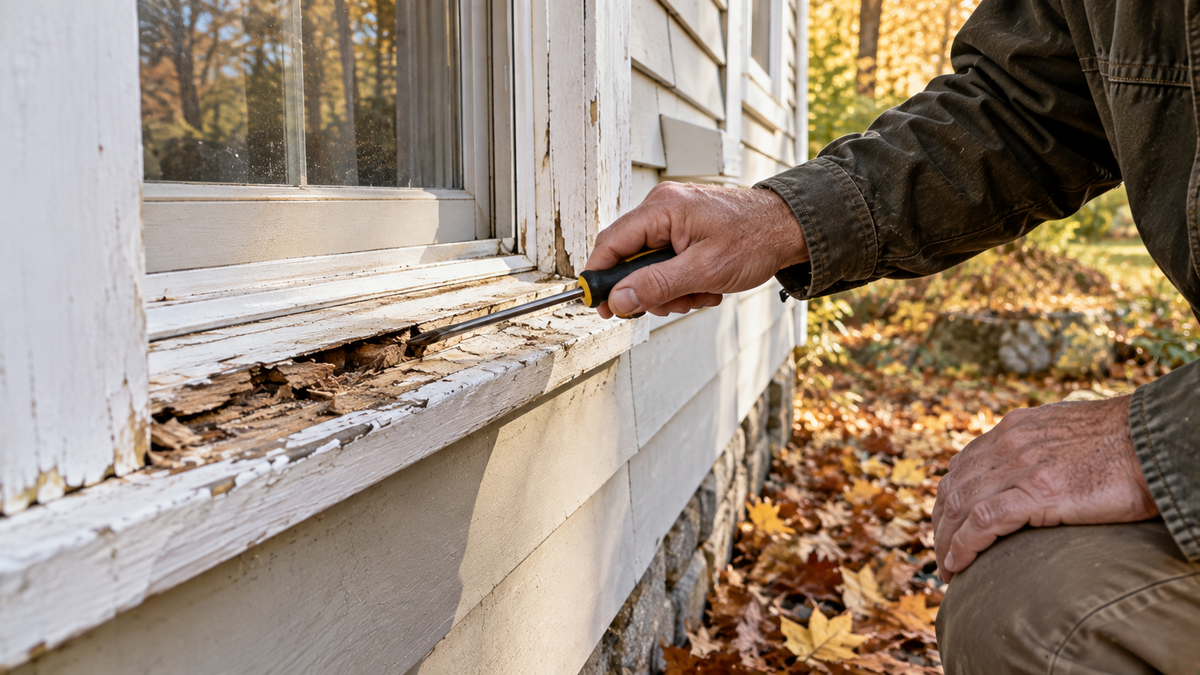
Window sills are the third common location. Paint failure on a sill creates a pocket where water sits after rain and snowmelt. The rot starts at the joint between the sill and the casing and works inward. This is one of the points I cover in the porch repair and rebuilding guide, because the failure pattern is the same across all exterior wood details.
How to Check for Rot Yourself
The most reliable field test for wood rot is a firm probe with a screwdriver or an ice pick at the base of posts, along ledger ends, and at window sill joints. Sound wood resists the probe. Rotted wood lets it penetrate without resistance, often crumbling slightly at the point of entry.
A firm push with a screwdriver tells you more than visual inspection because rot works inward and the surface can look intact while the interior is compromised. Work methodically around the exterior, paying particular attention anywhere you see paint failure, discoloration, or soft spots.
Let's Look Before Winter
If you find soft spots or you are not sure what you are looking at, give me a call now. Repairs that are straightforward in October become significantly more involved once the ground freezes and snow covers the evidence.
Call me at (802) 585-9112 or send a message.
Common Questions (FAQs)
Can you repair wood rot or does it always need full replacement?
It depends on how far it has spread. Surface rot that has not penetrated more than a third of the wood thickness can sometimes be stabilized with a consolidant and filled with epoxy filler, which is appropriate for trim and sills. Structural members, posts, and ledger boards that are rotted should be replaced rather than repaired, because the repair does not restore the original load capacity.
Does rot spread from one piece of wood to another?
The fungus that causes rot needs moisture to survive. It does not spread through dry wood the way mold spreads through a damp wall. If you remove the rotted material and eliminate the moisture source, the rot stops. The critical step is fixing whatever is letting water in, not just replacing the rotted wood, because new wood in the same wet condition will rot again.
How much does wood rot repair cost in Vermont?
The cost depends entirely on what is rotted and how far it has spread. Replacing a window sill is a modest repair. Replacing a deck ledger that has compromised the rim joist behind it is a more involved project because access requires removing decking and opening the house wall. Finding it early is always significantly less expensive than finding it after another winter.
Is fall too late to do exterior wood repairs in Vermont?
No. Most exterior wood repairs, including post replacement, ledger replacement, and sill repair, can be done through October in Vermont as long as temperatures stay above freezing during the work. Some finishes need temperatures above 50 degrees to cure properly, so the window narrows as October progresses, but it does not close until the first hard freezes arrive.