Building A Duplex In Vermont: What The HOME Act Allows And How to Plan It
Vermont's HOME Act opens the door to duplexes and small multi-unit buildings. Tim Chila explains what the law allows, how septic and fire code shape the site, and why design-build fits.
Quick Answer
Vermont's HOME Act (Act 47) lets you build a duplex in any district that allows year-round housing, on the same dimensional standards as a single-family home. In districts served by municipal sewer and water, a building with four or fewer units is also a permitted use. Outside those districts, a private septic system and well need a state wastewater and water permit. Multi-unit buildings follow Vermont's fire and building safety code, which asks more than a single-family home does. Plan the site, the utilities and the fire separation first, and bring in a design-build contractor before drawings are final.
Why Duplexes and Small Multi-Unit Buildings Are Back in Vermont
Vermont changed its zoning rules so towns allow more homes on the lots they already serve.
Hi there. I'm Tim. I have built and remodeled homes in Vermont for 50 years, and I take larger projects, including duplexes and small multi-unit buildings, as design-build work. The question for any owner or small investor is simple: what can I build on my lot now?
The HOME Act, Act 47, changed the state's zoning law. Its text says a duplex is allowed in any district that allows year-round residential development, with the same dimensional standards as a single-unit dwelling. It also says multiunit dwellings with four or fewer units are a permitted use in any district served by municipal sewer and water that allows residential development.
Our post on garage apartments and ADUs in Vermont covers a single accessory unit. This post covers whole buildings with two to four units.
What the HOME Act Says About Duplexes and Four-Unit Buildings
Two units follow single-family dimensions in most districts, and up to four units follow in sewer and water districts.
| Building type | Where it is allowed under the HOME Act |
|---|---|
| Duplex (two units) | Any district allowing year-round residential development, using single-unit dimensional standards |
| Multiunit, four or fewer units | Districts served by municipal sewer and water that allow residential development |
| Parking | In sewer and water districts a town may require up to one space per unit; elsewhere up to one and a half |
Your town's bylaws still govern setbacks, height and design review inside those limits. Call your zoning administrator with your parcel number and ask which district you sit in and whether municipal sewer and water serve it.
Sewer, Septic and Water Decide the Site
Municipal sewer and water make a multi-unit project simpler, and a private septic system needs a state permit before design is final.
Villages and city centers across Vermont have municipal sewer and water, and those lots can often hold a larger building. Lots in the countryside rely on a well and a septic system, and the state wastewater program reviews those. The Vermont DEC wastewater permit guide explains the application. Since each added unit adds bedrooms and daily water use, the septic design can set the number of units a rural lot supports.
I ask about sewer, water and soils at the first visit, because those answers can reshape the plan.
Fire and Building Code for Multi-Unit Buildings
Multi-unit buildings fall under Vermont's fire and building safety code, and most owner-occupied single-family homes sit outside it.
The code covers public buildings, and its text notes that most owner-occupied single-family homes are exempt. A building with rental units is treated differently, so construction and alterations of that building follow the state code and a state construction permit through the Division of Fire Safety. Confirm the threshold for your building with that office before drawings begin.
Expect these items to show up in the design:
- Fire-rated walls and floors between units.
- Sound control between units, since neighbors share a wall.
- Exits, smoke and carbon monoxide alarms laid out for each unit.
- Separate utility meters or a clear plan for shared systems.
Duplex Layouts That Work in Vermont
Side-by-side and stacked layouts each suit a different lot, and both can look like one well-built home.
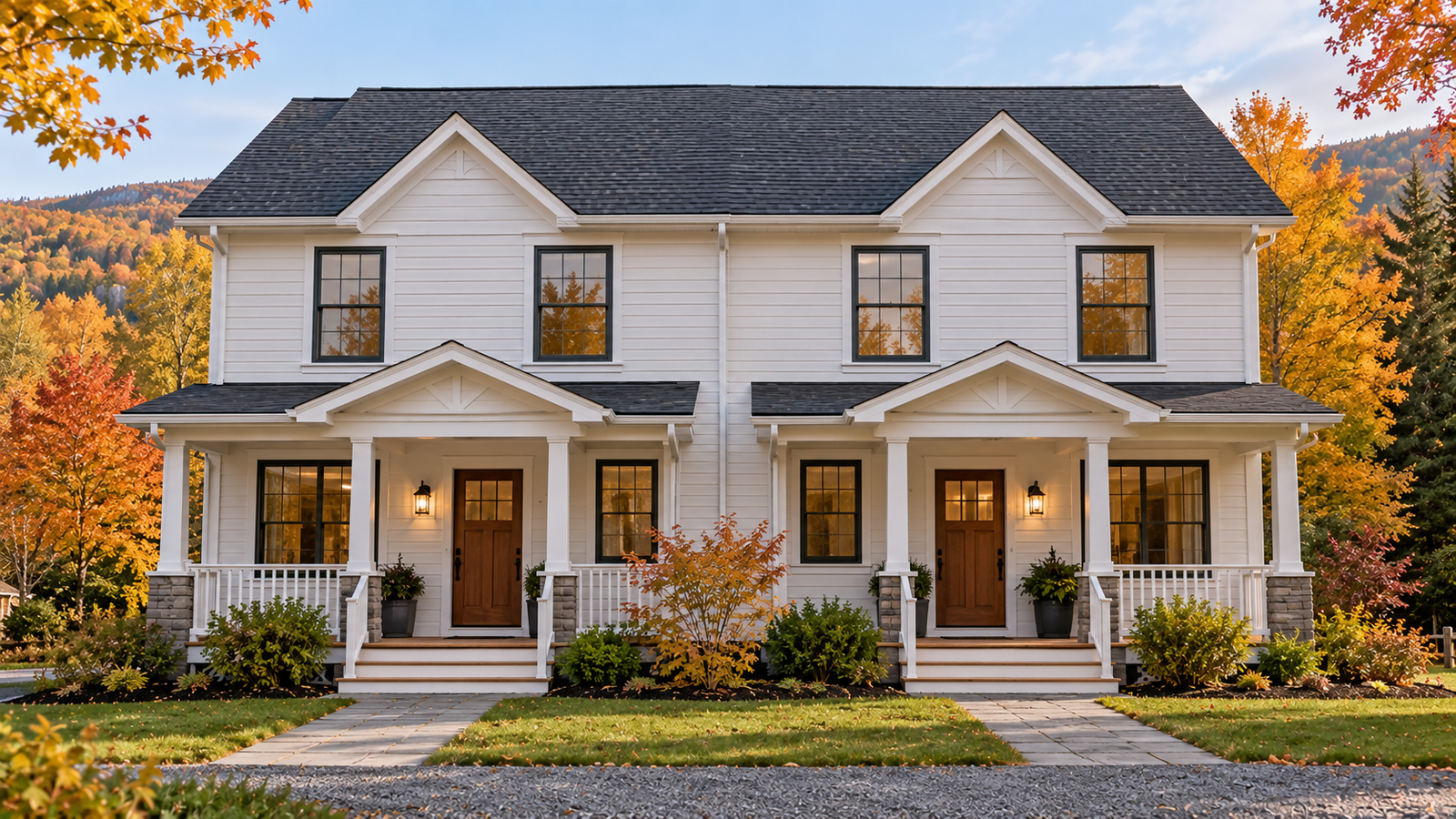
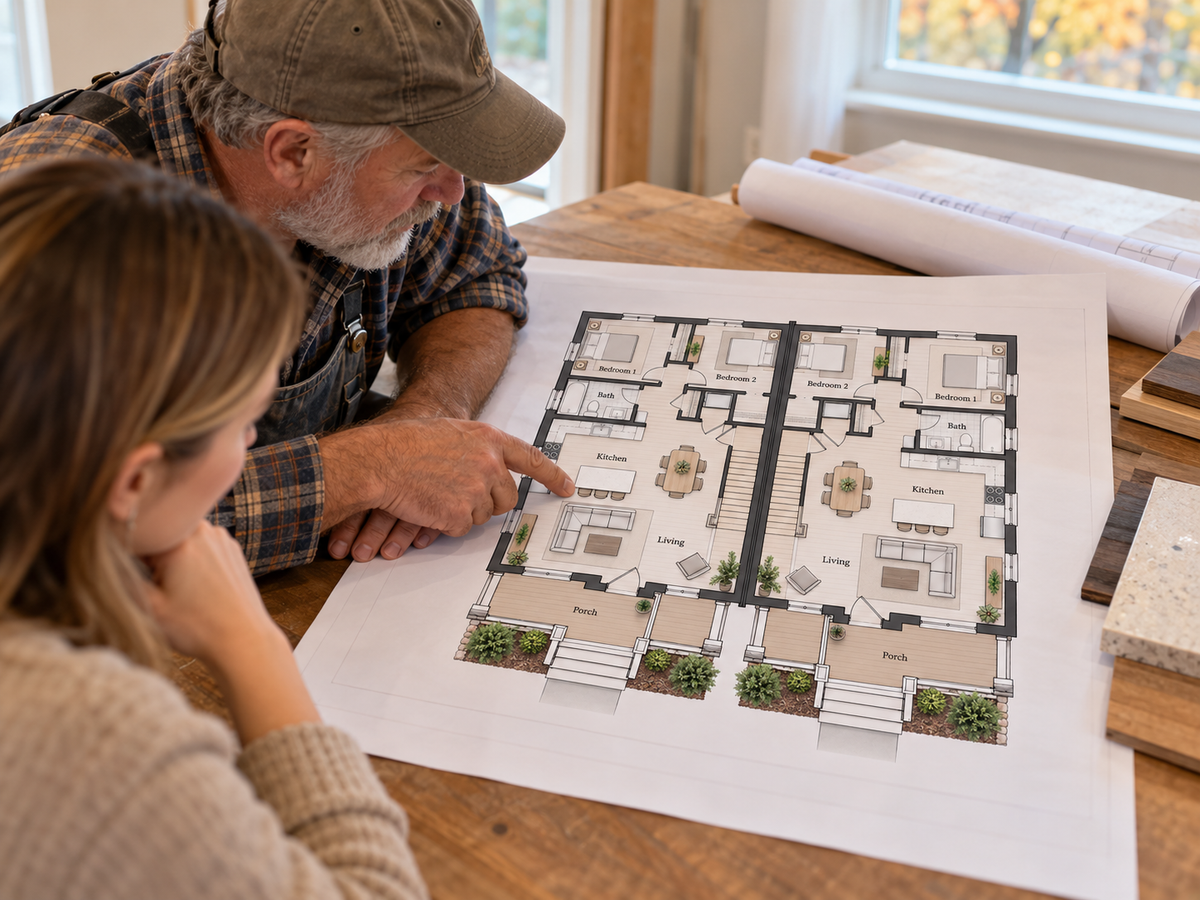
- Side-by-side. Two mirrored units share a center wall, and each has its own entry, yard and stair. This layout suits wide lots.
- Stacked. One unit sits above the other. This layout suits narrow lots and keeps the footprint small.
- Converted single-family home. An existing home splits into two units with new walls, a second kitchen and a second entry. Our post on whole-house renovation in Vermont shows how a large renovation sequence runs.
A Vermont duplex also needs mudrooms or covered entries, since each household brings in snow and boots. I draw those into the plan at the start.
Why Design-Build Fits Multi-Unit Projects
One team handling design, permits and construction keeps the budget and the fire code details in the same conversation.
A multi-unit building carries more coordination than a single home: engineers, utilities, state permits and trades working in two or more units. Our design-build services page explains how we run that process, and our new construction page covers the build itself. Our construction management post explains what oversight looks like on a larger job.
Let's Talk About Your Lot
A parcel review shows how many units fit, which utilities apply and what the first drawings need.
Send me the address and a short description of your goal. Call (802) 585-9112 or send a message.
Common Questions (FAQs)
Can I build a duplex on my lot in Vermont?
Often yes. The HOME Act allows duplexes in any district that allows year-round residential development, with single-family dimensional standards. Your lot still needs a wastewater and water solution and a town permit.
How many units can I build with municipal sewer and water?
Up to four units are a permitted use in districts served by municipal sewer and water that allow residential development. Your zoning administrator confirms whether your parcel qualifies.
Does a duplex need a septic permit in Vermont?
A lot on private septic needs a state wastewater permit for the added units. A lot on municipal sewer follows the municipal connection process.
Can I convert my single-family home into a duplex?
Often yes, when zoning allows two units and the building can hold a second kitchen, a second entry and the required fire separation. I walk the house and tell you what the conversion involves.