Snow Load On Vermont Roofs, Porches And Decks: What Your Structure Carries
Snow load is the weight your Vermont roof, porch and deck carry all winter. Tim Chila explains snow weight, drifting, warning signs and what to check before the first storm.
Quick Answer
Snow load is the weight of snow on a structure, measured in pounds per square foot. Vermont's building code assigns each town a ground snow load, and the values climb in the mountains. Fresh snow is light, but packed snow, ice and rain on snow add weight fast. Porch roofs, low roofs beside a tall wall, and decks below a metal roof collect the heaviest piles. Clear snow from the ground with a roof rake, watch for warning signs inside the house, and have a carpenter inspect any sagging beam, post or rafter before the next storm.
Why Snow Load Matters Before the First Storm
Snow load decides how much weight your roof, porch and deck carry all winter, and the weight changes with every storm.
Hi there. I'm Tim. I have framed and repaired roofs, porches and decks in Vermont for 50 years, and winter weight is a steady test of that work. October is the right month to look, because the snow is still weeks away and the repairs can happen in dry weather.
Vermont's building code lists a ground snow load for every town. The annex groups towns into 40, 50, 60 and 70 pounds per square foot, and it notes that mountain sites can call for more. A home in the Champlain Valley and a home on a ridge in the Green Mountains face different numbers, so ask your town zoning administrator or building inspector which one applies to your address.
Snow Weight Changes With Every Storm
Ten to twelve inches of fresh snow weighs about 5 pounds per square foot, and the same weight fits in just 3 to 5 inches of old, packed snow.
The Pacific Northwest National Laboratory building science guide gives these figures. It also explains that one inch of ice equals about one foot of fresh snow, and that two feet of old snow plus two feet of new snow can reach roughly 60 pounds per square foot.
| Snow condition | What it means for your structure |
|---|---|
| Fresh powder | Light, and it sheds from a steep roof |
| Packed old snow | Same weight in a fraction of the depth |
| Wet snow or rain on snow | The heaviest load, and it arrives quickly in a Vermont thaw |
| Ice layers | One inch of ice equals about one foot of fresh snow |
Vermont winters swing between thaw and freeze, so a roof often carries several layers at once. Depth alone tells you little. A foot of packed, wet snow can outweigh two feet of powder.
Drifts and Roof Shapes Create the Heaviest Spots
Snow piles up where wind drops it, so a low roof next to a tall wall carries far more weight than the open roof above it.
Wind carries snow across a roof and drops it behind any obstruction. That includes a chimney, a dormer, a second-story wall and a valley between two roof planes. The building science guide calls these areas "aerodynamically shaded," and the snow builds there into drifts.
Here are the places I check first on Vermont homes:
- Porch roofs attached to a taller wall. Snow slides from the main roof onto the porch roof and drifts against the wall.
- Roof valleys. Two slopes dump into one narrow channel.
- Additions and ells. Old Vermont farmhouses often have a low ell beside a tall main house, so the ell roof collects the drift.
- Flat or low-slope roofs. Vermont's code sets a minimum roof snow load of 40 pounds per square foot on roofs at or under a 5 degree slope.
Our guide to porch repair and rebuilding in Vermont explains how a porch frame and roof connect to the house, and that connection is where drift loads show up first.
Decks Carry Snow From Above and Below
A deck takes snow that falls on it and snow that slides off the roof above it, so the framing and ledger connection matter most.
A metal roof sheds snow all at once, and that slide can land on a deck or porch below. Snow also sits on deck boards and traps moisture against the wood. Over the winter, moisture and weight work on posts, beams and the ledger board that fastens the deck to the house.
I look at three connection points on a deck before winter:
- The ledger. The bolts or structural screws holding the deck to the house should sit tight against sound wood.
- The posts and footings. Posts should stand plumb and rest on solid footings.
- The beams and joists. Look for rot at the ends and along the tops, where water collects.
If you plan a new deck, our deck building service page describes how we frame for Vermont conditions. Our post on composite, pressure-treated and cedar decking covers the boards that sit on top.
Warning Signs and Safe Snow Removal
Sagging ceilings, creaking sounds, doors that stick and new cracks all signal an overloaded frame.
The building science guide lists those warning signs and advises leaving the house when a structure shows them. Check these spots after each large storm:
- Interior doors and windows that begin to stick.
- Cracks in drywall or plaster near ceilings and corners.
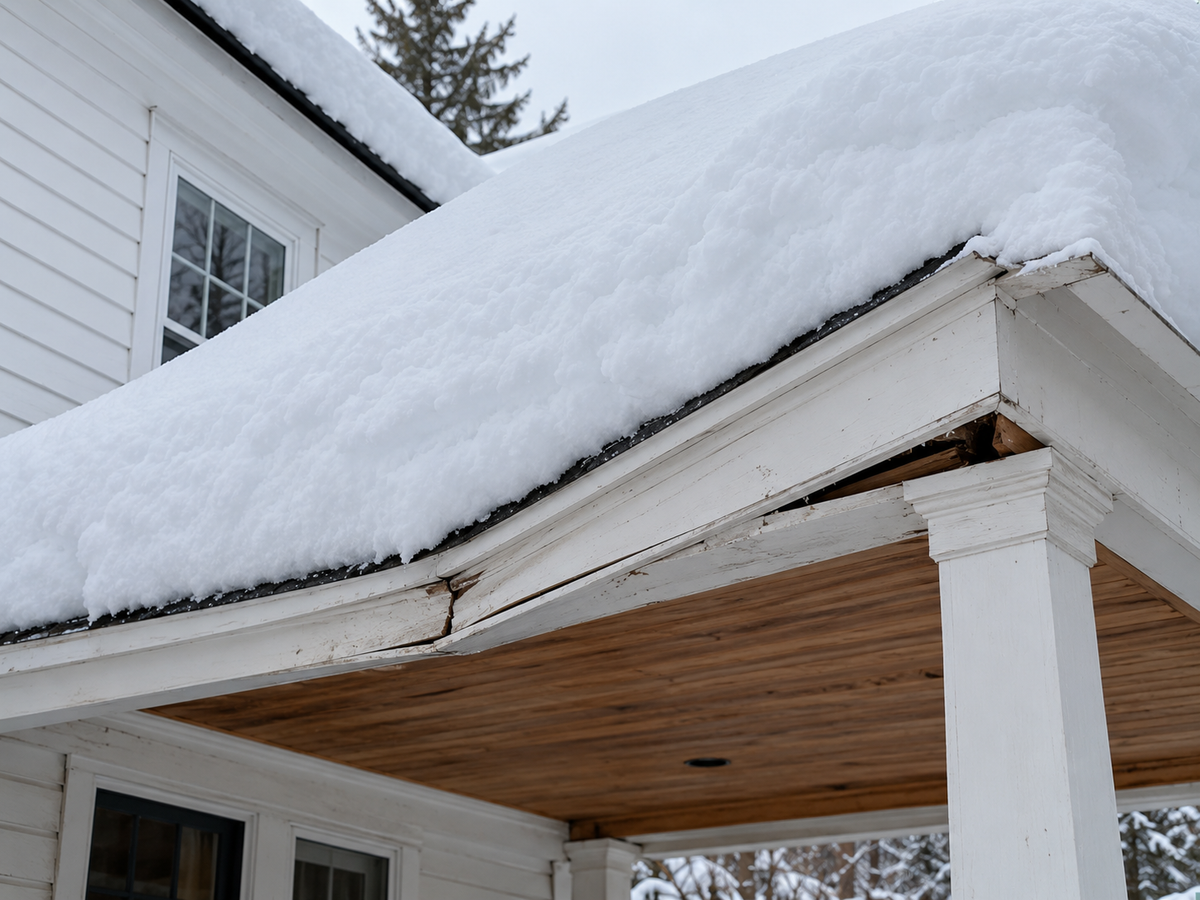
- A visible sag in a rafter, beam or porch roof line.
- Creaks or pops from the roof framing.
For removal, a roof rake works from the ground and keeps you off the ladder. Leave one to two inches of snow on the shingles to protect them, and use a plastic blade. Roof work on a steep or icy roof belongs to a professional with fall protection.
Let's Check Your Structure Before Winter
A short visit before the first storm shows whether your roof, porch and deck need reinforcement.
Walk me through the areas that worry you. I look at the framing, the connections and the drainage, and I tell you plainly what to fix now and what can wait. Call (802) 585-9112 or send a message.
Common Questions (FAQs)
How much snow can a Vermont roof hold?
It depends on the design load for your town, which the state code lists between 40 and 70 pounds per square foot, with higher values in the mountains. Ask your town zoning administrator for the number that applies to your address.
Should I remove snow from my roof?
Remove snow from the ground with a roof rake when depth builds up, especially over porches and entries. Leave one to two inches on the shingles, and hire a professional for any work on the roof itself.
Does snow on a deck cause damage?
Snow adds weight and holds moisture against the wood. Sound framing carries the weight, and moisture wears at the ledger, posts and joist ends over the years, so inspect those parts each fall.
What does a sagging porch roof mean?
It means the rafters, beams or posts carry more than they were built for, or that rot has weakened them. Have a carpenter look at it before the next storm.